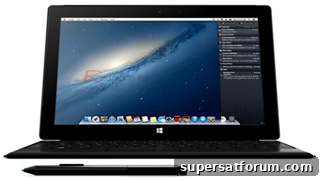
Whether you’re a Microsoft or Apple enthusiast, the Surface Pro has demonstrated that a tablet can be every bit as capable as the iPad—perhaps even more so. Able to run full x86 desktop applications and games (think Premiere Pro, Photoshop, Maya, Diablo III) while offering a wide range of connectivity options and a physical keyboard, the Surface has reached a level of versatility that has many long-time Apple fans, myself included, seriously interested.
Unlike me—whose only Apple device used to be an iPad—many of these users prefer macOS to Windows, and they would likely prefer a Surface-style device that runs an adapted version of their preferred operating system. Fortunately, there are signs Apple may be preparing to move in that direction.
When Apple introduced a 64-bit processor in the iPhone 5S, it was easy to dismiss the change as a marketing move that provided more power than current smartphone apps needed. Looking back, however, it appears that the 64-bit leap was meant to prepare developers for more demanding applications on larger devices, in particular the iPad.
The larger screen real estate of an iPad combined with 64-bit performance would enable far more powerful applications while retaining the intuitive touch experience users expect. For instance, mobile video editors such as Pinnacle Studio (available on the App Store) could become significantly more capable with extra processing headroom. Yet even with these improvements, current tablet apps still fall short of the depth and functionality found in professional desktop software like Final Cut Pro X.
Sixty-four-bit architecture is traditionally associated with desktops. Combining the strengths of desktop software and tablet convenience is a strategy Microsoft embraced with the Surface, but Apple has been cautiously converging elements of iOS and macOS for some time, migrating features between the platforms with each major release.
It’s always been curious that Apple hasn’t introduced touchscreens to its Mac lineup, given the company pioneered multi-touch for mainstream devices with the iPhone and championed touch interfaces as a major technological shift. But the product and sales figures help explain Apple’s restraint. In Q3 2013 Apple sold 45.8 million iPhones and iPads, compared to just 3.8 million Macs, a clear indicator of where the company’s revenue and growth have been concentrated: mobile devices.
Even though Mac sales in the same quarter a year earlier were roughly 4 million—only a slight decline—the disparity highlights Apple’s mobile focus. That said, Apple is unlikely to neglect the professional market, which requires significant computing power and where some users are turning to devices like the Surface.
Recent rumors about a larger iPad—potentially a 13-inch model—have reignited discussions about Apple’s direction. A tablet of that size would lend itself well to desktop-style use while remaining portable. My intuition is that a 13-inch, 64-bit iPad could effectively replace the 13-inch MacBook Air in Apple’s lineup.
It’s possible the familiar iOS interface would remain intact for touch-first usage, but when docked at home or in an office, the device could provide a more traditional macOS-like experience—bringing desktop-level workflows to a mobile form factor.
Apple’s gradual blending of mobile and desktop capabilities raises important questions about the future of both platforms. Will the iPad evolve into a true desktop alternative for professionals? If Apple chooses to combine iOS portability with macOS power—either through software convergence or a dockable hardware model—the line between tablet and laptop could blur even further, offering users the best of both worlds.
What do you think about Apple’s mobile direction? Could the iPad become a practical desktop replacement for creative and professional users?