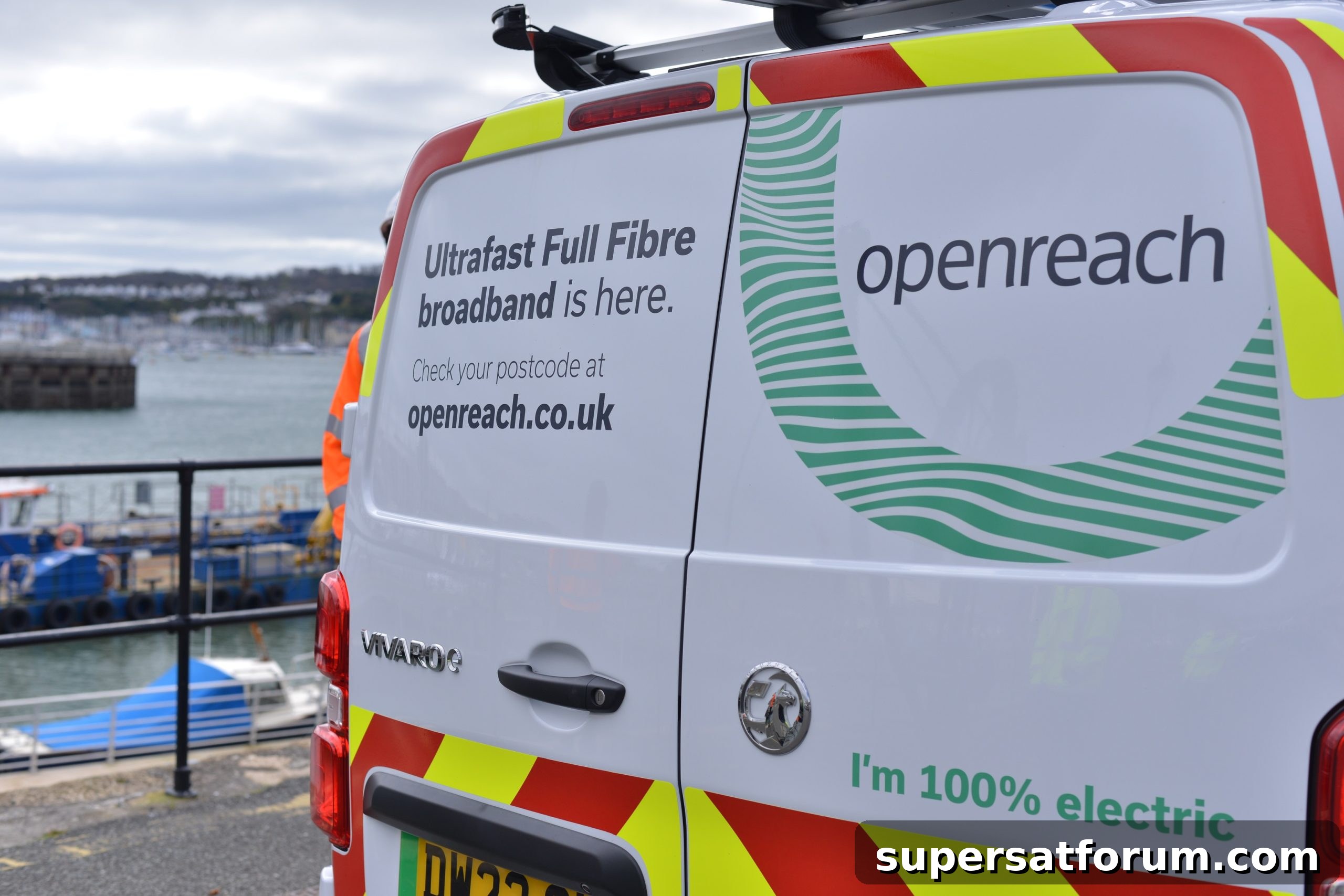
The rapid expansion of Openreach’s full-fibre network over the past year has delivered faster, more reliable broadband to around half of UK premises.
Backed by major contracts, Openreach has rolled out its full-fibre infrastructure faster and further than any other UK provider. Each week the company connects roughly 78,000 new premises — a rate comparable to bringing a city the size of Peterborough in Cambridgeshire online — with full-fibre broadband.
In 2024 alone, Openreach extended full-fibre coverage to 4.2 million additional premises, bringing ultrafast broadband within reach of approximately 17 million homes and businesses.
A significant portion of this expansion—4.3 million premises—targets remote and rural communities, reaching the far-flung Isle of Unst in Shetland and the Isles of Scilly in the southwest, ensuring even hard-to-reach areas can access next-generation broadband technology.
Clive Selley, Chief Executive of Openreach, commented: “Fast, reliable connectivity is essential for the UK, and the increased traffic on our broadband network shows that customers are increasingly reliant on it in their daily lives. We’re building and connecting people faster than ever before, and I’m proud of the progress our engineers have made.”
Demand for full-fibre broadband is rising quickly, with orders increasing 26% year-on-year. Around 68,000 orders are now placed weekly across Openreach’s network via more than 300 service providers, including BT, Sky, TalkTalk, Vodafone and Zen.
Despite these strong figures, Selley says there remains room for growth: “Over a third of properties have already switched, but there’s plenty of room for more people to get a better connection right now.”
Closing the digital divide
Alongside its commercial rollouts, Openreach is working with the UK government on initiatives to improve connectivity in rural areas.
Recent government-backed contracts worth more than £289 million will bring fast, reliable broadband to towns and villages across North and Southwest Wales, Shropshire, Herefordshire, Devon, Somerset, Essex, North East England and Worcestershire.
This investment builds on an earlier 2024 government commitment that unlocked up to £800 million to tackle connectivity gaps in rural parts of England, Scotland and Wales.
These funds form part of Project Gigabit, the government’s flagship broadband programme designed to provide gigabit-capable connections to hard-to-reach premises and eliminate the frustrations of slow performance and buffering. So far, Project Gigabit has delivered ultrafast connectivity to more than 1.1 million rural homes and businesses, with further expansions planned.
Technology Secretary Peter Kyle said: “We are determined to deliver the infrastructure this country needs to thrive, and I am thrilled to see so many homes and businesses in all areas of the country getting access to the fastest broadband speeds on the market through Project Gigabit. With today’s £289 million investment, we are not only boosting connectivity, but making it easier to work, learn, shop and stay in touch with loved ones online. As part of this government’s Plan for Change, we will plug digital divides, helping to make the UK a more equal society where everyone is given a fair shot in life.”
The government’s strategy is also expected to have broad economic benefits. Kyle added that improving gigabit connectivity “stimulates rural economies and reduces regional disparities,” and experts forecast that a full-fibre rollout could boost UK productivity by as much as £73 billion.
What full-fibre means for daily life
Full-fibre, also called gigabit-capable broadband, offers substantial advantages over older copper-based systems: far higher speeds, more reliable connections with fewer dropouts, and consistent performance even at peak times.
This technology supports modern rural living by enabling remote working, telehealth services, online education and e-commerce. It also underpins digital services that are increasingly essential for everyday life.
“We believe that everyone deserves access to fast and reliable broadband, and we’re proud this partnership will extend our ultrafast, ultra-reliable network to areas that would otherwise be left behind,” Selley said.
Currently, more than 85% of the UK has access to gigabit-capable broadband, marking significant progress toward the government’s target of full gigabit coverage by 2030. Openreach has been a major contributor to that progress and remains committed to modernising Britain’s digital infrastructure.
“Our new full-fibre broadband network now reaches more than half of all properties in the UK, and we’re confident we can reach as many as 30 million premises by the end of the decade, assuming the right regulatory and investment conditions exist,” Selley added.
Beyond coverage, Openreach has helped attract industry investment. Dozens of contracts valued at over £2.2 billion have been awarded as part of Project Gigabit, with more than ten suppliers, including smaller independent broadband providers, committed to delivering local upgrades.
As digital connectivity becomes as essential as water or electricity, the expansion of full-fibre broadband offers improved services to underserved parts of the UK and builds a resilient foundation for future economic growth.
Selley describes the rollout as “a British infrastructure success story” that will improve lives while unlocking long-term economic, social and environmental benefits.
However, the UK’s accelerating full-fibre rollout should be viewed in context: many other European countries reached 50% coverage several years earlier.
(Image Credit: Openreach)
Looking to revamp your digital transformation strategy? Discover Digital Transformation Week, an event held in Amsterdam, California and London, co-located with IoT Tech Expo, AI & Big Data Expo, Cyber Security & Cloud Expo and other industry gatherings.
Explore upcoming enterprise technology events and webinars powered by TechForge for additional learning and networking opportunities.