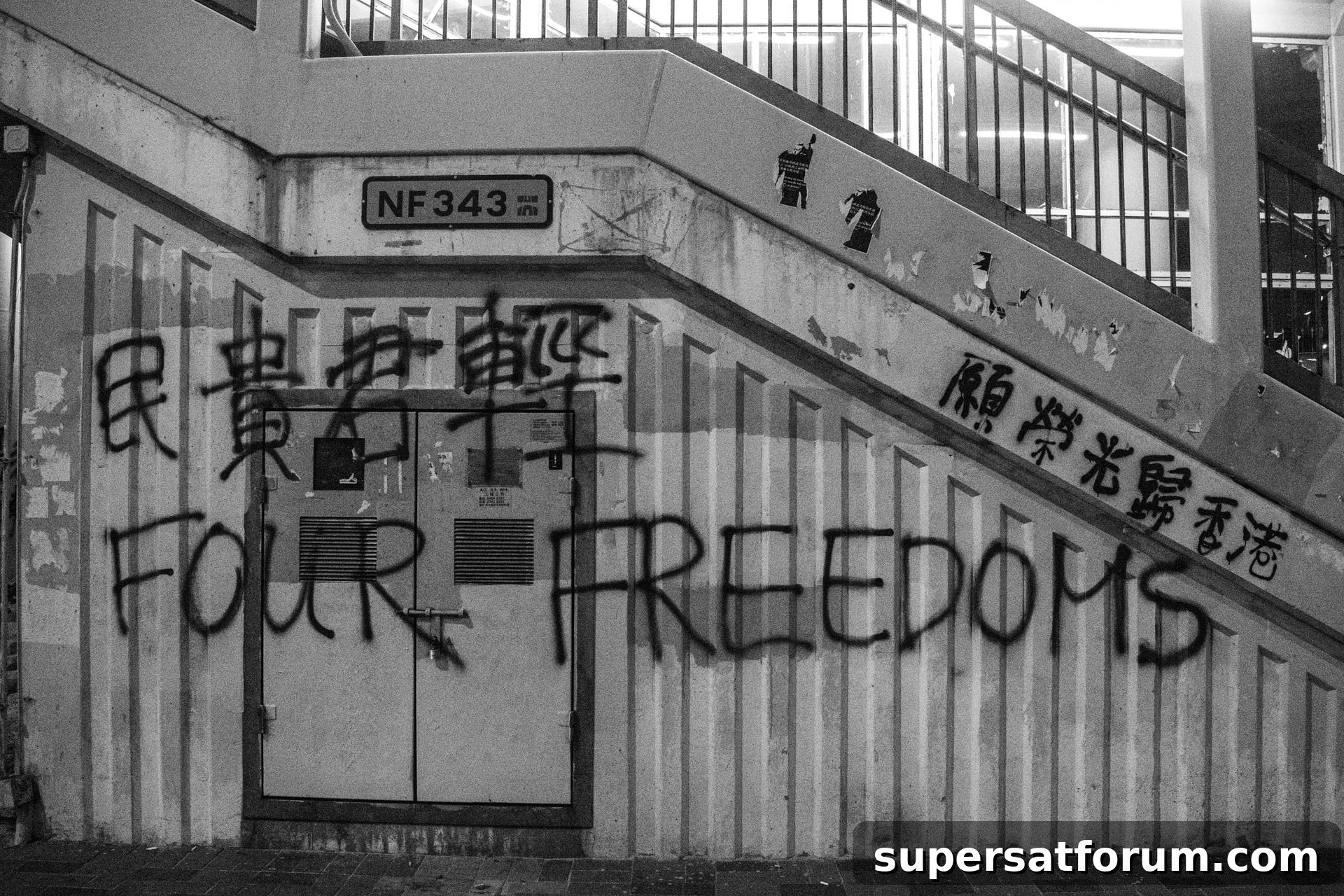
China’s strict internet censorship is spreading to Hong Kong following the passage of a controversial national security law.
The so-called Great Firewall of China limits which internet services and websites citizens can access. Major global services such as Google are effectively blocked in mainland China because authorities cannot easily control the information those platforms provide, unlike domestic alternatives such as Baidu.
Under the “one country, two systems” framework established when sovereignty returned to China in 1997, Hong Kong was intended to retain a high degree of autonomy and different legal, economic, and civil systems from the mainland. As a semi-autonomous region, Hong Kong historically enjoyed fewer restrictions than mainland China, including a freer internet environment.
On June 30, the Law of the People’s Republic of China on Safeguarding National Security in the Hong Kong Special Administrative Region was enacted. The law prompted protests and widespread concern because many view it as undermining the region’s autonomy and civil liberties.
Key elements of the law include severe penalties—up to life imprisonment—for offenses such as secession, subversion, terrorism, and collusion with foreign forces. The law also allows for closed-door trials and, in some cases, the transfer of suspects for prosecution in mainland China.
Critics warned that tighter Beijing control could extend to Hong Kong’s online space. The law grants expanded powers to the police, enabling them to restrict online speech, compel internet service providers to disclose user data, and order platforms to be taken down.
In response, many Hong Kong residents have hurried to remove or erase their digital footprints—particularly any content that might be interpreted as supporting last year’s protests or criticizing the Chinese government.
Charles Mok, a pro-democracy lawmaker representing Hong Kong’s technology sector, captured the urgency of the moment on social media:
We are already behind the de facto firewall, as of midnight this morning when the law came into effect, barely two hours after it was announced. Thank you very much. https://t.co/ctN9keDz8U
— Charles Mok 莫乃光 (@charlesmok) July 7, 2020
Mok warned that Hong Kong’s role as a regional internet and telecommunications hub could be jeopardized: “We used to be an internet and telecom hub in the region. Companies moved services from the mainland to Hong Kong and now Hong Kong has become like China, so they will leave.”
Many observers say the freedoms Hong Kong once enjoyed—including a relatively open internet—are being eroded. While the mainland’s full Great Firewall cannot be replicated overnight, the new measures are widely seen as initial steps toward greater online control.
(Photo by Kon Karampelas on Unsplash)
Interested in hearing industry leaders discuss topics like this? Attend co-located events such as the 5G Expo, IoT Tech Expo, Blockchain Expo, AI & Big Data Expo, and Cyber Security & Cloud Expo World Series, which hold conferences in locations including Silicon Valley, London, and Amsterdam.