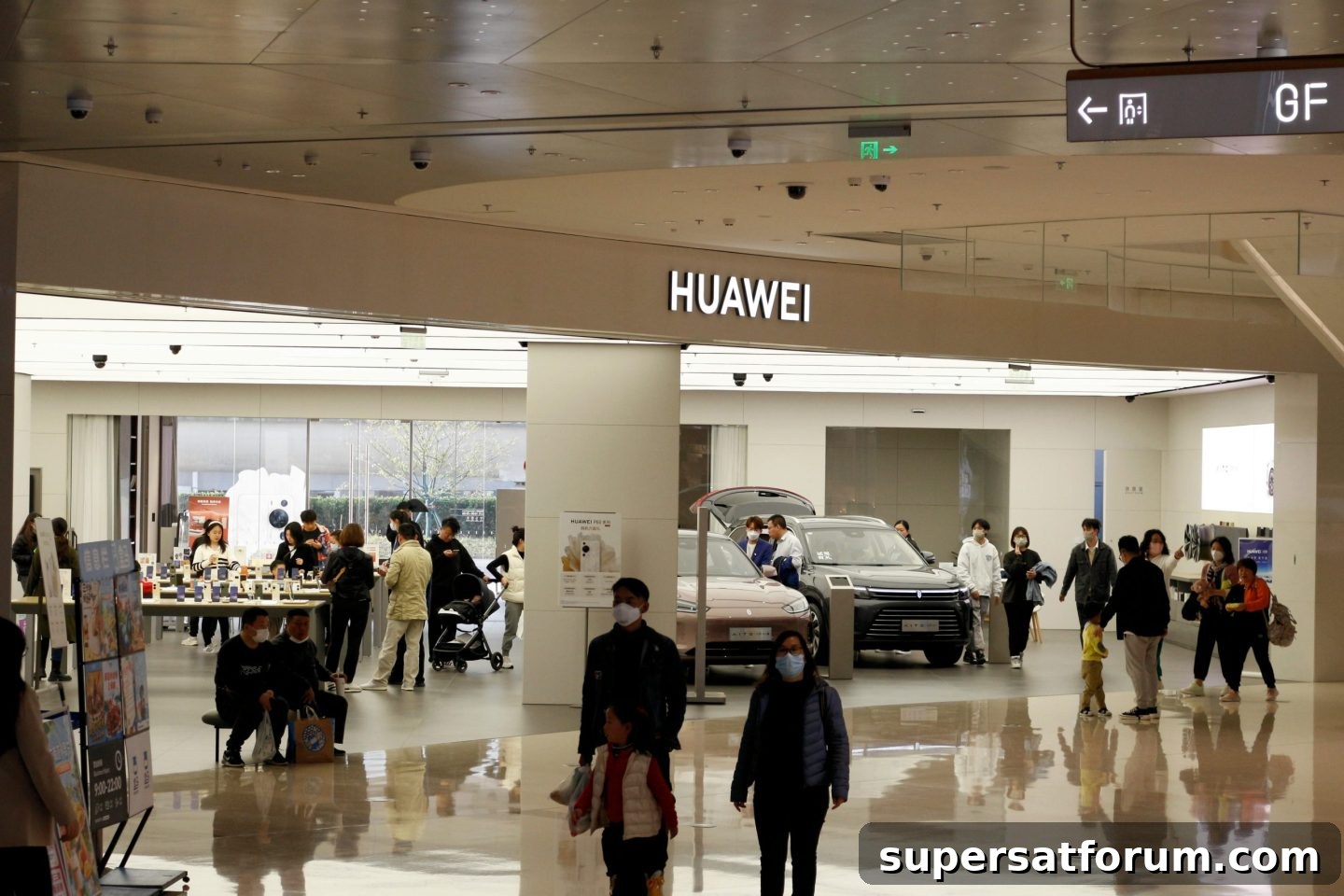
Huawei is targeting the Asia-Pacific region as a key market for its artificial intelligence offerings, reporting a 20-fold expansion of its public cloud services there over the past four years despite U.S.-led sanctions.
At a media briefing in Bangkok on August 15, Jacqueline Shi, President of Global Marketing and Services at Huawei Cloud, said the company will continue to deliver comprehensive AI solutions across the region. Huawei’s portfolio includes the Ascend Cloud Service, the ModelArts AI development platform, and Pangu, the company’s proprietary large language model that powers generative AI services similar to ChatGPT.
Huawei has already started practical deployments in the region, working with Thailand’s meteorological services to implement the Pangu LLM and partnering with organizations in multiple sectors, including finance, to raise efficiency and reduce operating costs.
This Asia-Pacific AI strategy supports Huawei’s broader aim to diversify revenue and win more international customers as demand for generative AI grows across traditional industries, even while the Shenzhen-based firm remains on the U.S. government’s entity list.
Shi noted that the Asia-Pacific is one of Huawei’s largest markets for cloud computing. The region has become a testing ground for products such as its serverless database solution prior to wider global rollouts.
Huawei’s global cloud expansion has continued beyond Asia-Pacific. In May the company launched Egypt’s first public cloud service in Cairo and introduced an Arabic-language large language model. In September 2022 Huawei opened a data centre in Riyadh to offer public cloud services to customers in Saudi Arabia and neighboring countries.
Within mainland China, Huawei is the second-largest cloud services provider, behind Alibaba Cloud, according to research firm Canalys. Cloud computing has been a strong growth engine for Huawei in 2023: the company reported that cloud division revenue rose 21.9% year-on-year to 55.29 billion yuan (about US$7.6 billion) in its latest annual report.
Huawei’s AI stack is built on the company’s own processors and software framework, which helps it work around restrictions that limit mainland China’s access to certain U.S.-origin technologies such as advanced semiconductors. Domestically, Huawei’s Ascend AI chips have emerged as an alternative to Nvidia GPUs that face U.S. export controls.
(Photo by P. L.)
See also: Huawei’s upcoming chip may break China’s 7nm barrier
Unified Communications is a two-day event held in California, London, and Amsterdam that explores the future of workplace collaboration in a digital world. The event is co-located with industry conferences covering digital transformation, IoT, edge computing, intelligent automation, AI and big data, and cybersecurity and cloud.
Discover other upcoming enterprise technology events and webinars powered by TechForge here.