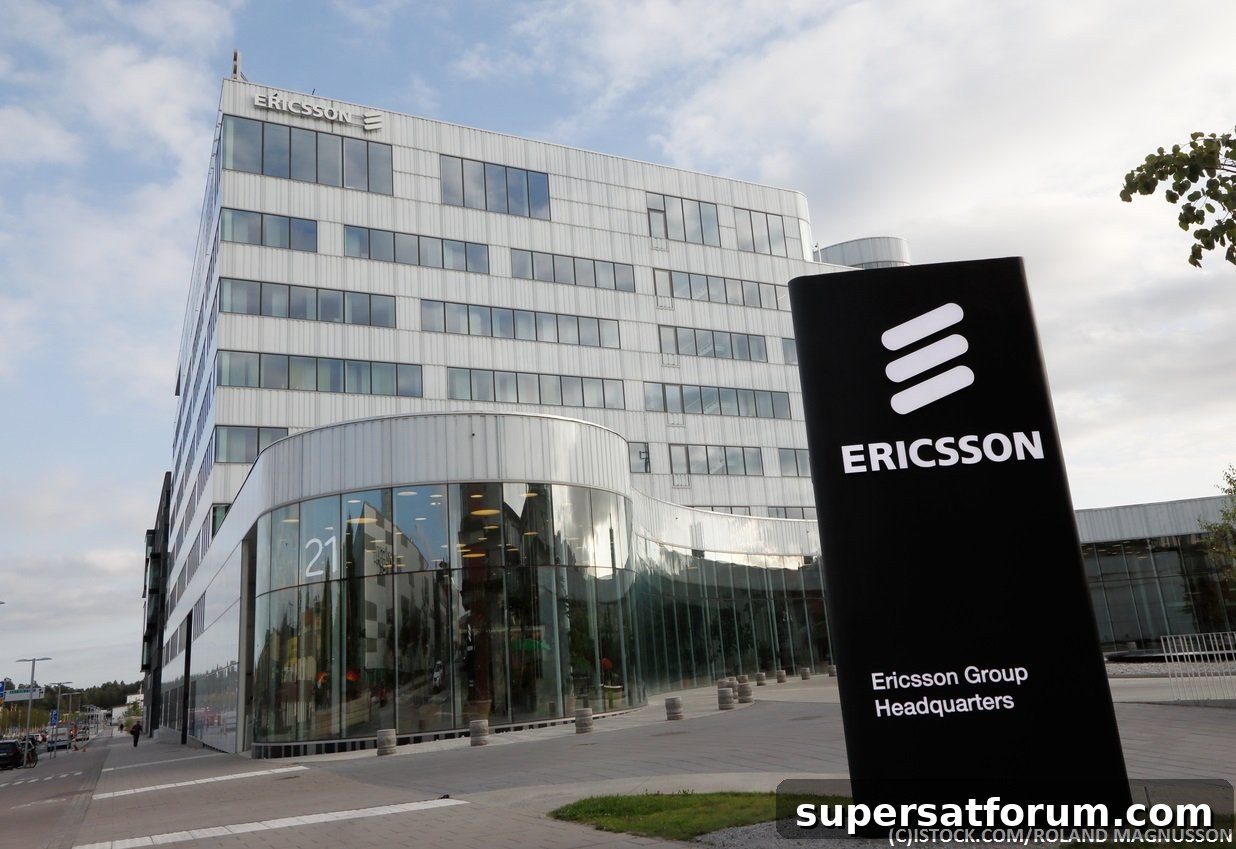
Ericsson has announced plans to build its first fully automated smart factory in the United States. The facility will produce Advanced Antenna System radios designed to boost network capacity and coverage in rural areas, as well as 5G radios for urban deployments.
The company highlighted that both rural and urban production are critical to accelerating 5G rollouts across North America. In addition to the new U.S. smart factory, Ericsson is expediting a broader rollout of next-generation smart manufacturing by introducing a modular, flexible production model at its existing factories in Estonia, China and Brazil.
Fredrik Jejdling, Executive Vice President and Head of Networks at Ericsson, said: “We continue to focus on working closely with our customers and supporting them in the buildout of 5G globally and in North America. With today’s announcement, we conclude months of preparations and can move into execution also in the U.S. In addition, we are digitalizing our entire global production landscape, including establishing this factory in the U.S.”
“With 5G connectivity we’re accelerating Industry 4.0 and enabling the automated factories of the future,” Jejdling added.
Industry commentators have emphasized how smart, connected machines are reshaping manufacturing. As noted in a recent IoT News piece, manufacturers are shifting from one-time machinery sales toward service- and software-driven models that deliver ongoing value. This transformation focuses on machine-level platforms that can scale, provide greater autonomy, stream real-time data for improved predictive maintenance, and enable integration across different vendors on the shop floor.
Ericsson’s move toward automated, software-enabled production aligns with those trends: a U.S. smart factory will allow local manufacturing of critical radio equipment while the company modernizes its global production network. The combined approach aims to support faster deployments, enhance supply-chain agility, and deliver equipment tailored for diverse geographic needs—rural coverage expansion and dense urban capacity.
As manufacturers adopt digitalized, modular production methods, they benefit from greater flexibility to adjust output, improved quality through automation, and deeper visibility into operations via real-time data. For telecom equipment makers like Ericsson, this enables closer collaboration with carriers and system integrators during network rollouts, ensuring products and production can rapidly adapt to changing demand and technology evolution.
The company’s U.S. factory announcement follows a broader industry shift toward Industry 4.0 principles—automation, connectivity, and data-driven operations—that together aim to lower costs, shorten lead times, and increase resilience in manufacturing ecosystems. Ericsson plans to leverage these advances across its global manufacturing footprint to better support the ongoing expansion of 5G networks.
Interested in hearing industry leaders discuss these topics? Attend co-located events that bring together experts in IoT, blockchain, AI, big data, cybersecurity and cloud technologies at leading industry expos held in major tech hubs worldwide.