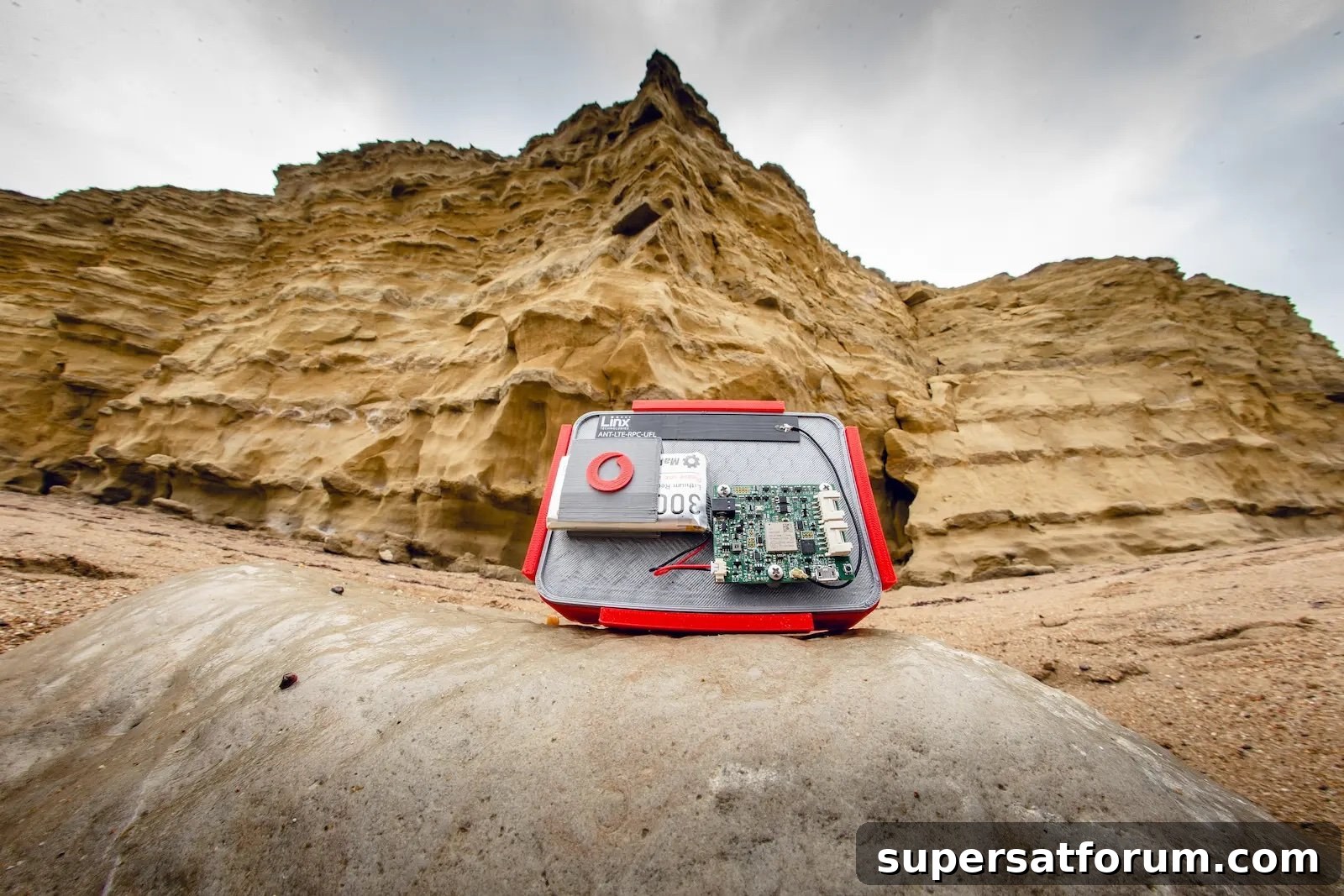
Vodafone is deploying sensors on its Narrowband Internet of Things (NB-IoT) network to monitor coastal cliffs and detect landslides. The initiative uses a versatile prototype device that can accommodate different sensors for multiple applications, helping businesses, local authorities, and researchers adopt smarter approaches to environmental monitoring and public safety.
Johan Wibergh, Chief Technology Officer at Vodafone, said:
“The global reach of our digital networks and technologies has a key role in addressing climate change, from monitoring the health of forests to re-establishing connectivity following flash floods. Now, we are turning our attention to the very real threat of coastal erosion.”
Vodafone has partnered with 5G RuralDorset, the British Geological Survey (BGS), Bournemouth University, Neutral Networks, and Dorset Council to develop a monitoring system to manage coastal hazards.
Using Vodafone’s universal device, sensors developed by Bournemouth University gather data on ground movement, changes in groundwater, and environmental factors such as ground temperature. This information is sent over the NB-IoT network for cloud processing and analysis by an AI/ML system. BGS experts review the results to identify potential risks and recommend appropriate actions.
Dr. Marios Angelopoulos, Associate Professor at Bournemouth University, commented:
“We are excited to work on this multi-disciplinary project as it gives our university the opportunity to synergise with industry in developing and trialling innovative 5G technologies to the benefit of our region with positive social and economic impact.”
Catherine Pennington, Engineering Geologist and Landslide Specialist at the British Geological Survey, added:
“As sea levels rise, we are likely to see an increase in landslide activity at the coast. We are excited to work on this multi-disciplinary project which will enable us to develop and trial new technologies in order to better understand the driving processes, helping rural areas to build resilience so that we can adapt to these changes.”
The Dorset and East Devon Coastline, known as the Jurassic Coast, stretches 155 km and is marking its 20th anniversary as a UNESCO World Heritage site. This year the area has already experienced several cliff movements, including an April landslide that dislodged more than 4,000 tonnes of material from the cliff face.
Peter Wharf, Deputy Leader of Dorset Council, noted:
“Cliff failures are a very dangerous problem not only in Dorset but in other coastal regions that attract large numbers of visitors every year. This research, along with coastal public safety trials, is critical to people’s safety and the long-term prosperity of the area. Current monitoring methodologies are also very costly for the council and this new technology will hopefully provide significant savings in future.”
Vodafone says the sensors can connect to its NB-IoT network across 21 European countries, which means extensive stretches of the EU’s 68,000 km coastline could potentially benefit from the technology.
Find out more about Digital Transformation Week North America—a virtual event exploring advanced digital transformation strategies—originally held on November 9-10, 2021.