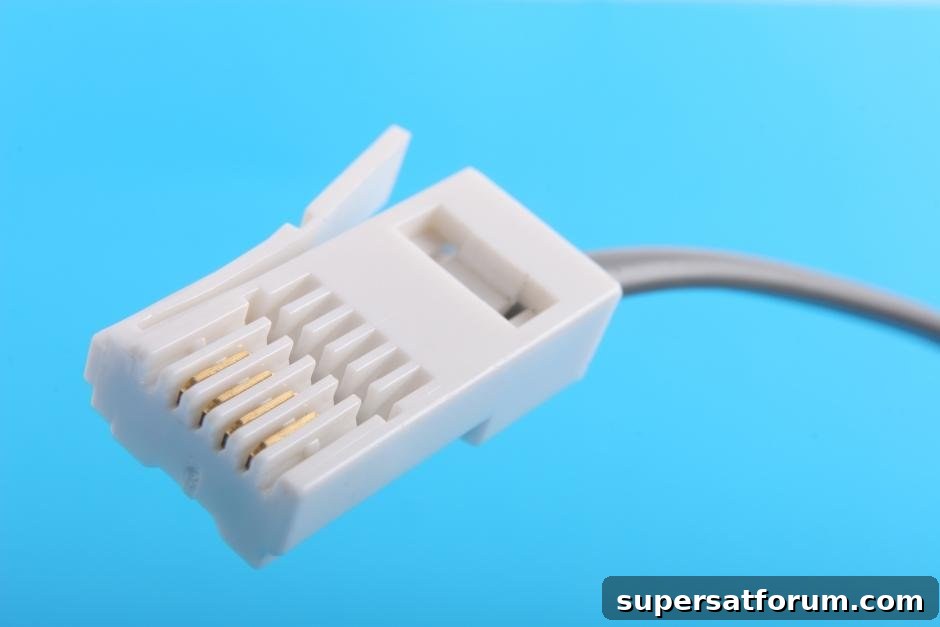
The rise of fiber optic cables once led many to conclude that copper was obsolete for telecommunications infrastructure. While fiber offers unmatched long-distance performance, copper remains more widespread and less expensive. Recent advances are changing that assumption: new technologies are revitalizing copper, enabling it to deliver higher speeds and greater capacity than previously possible.
At the Broadband World Forum in Amsterdam, Genesis’ President and CTO Stephen Cooke highlighted how bonded copper solutions can support substantial data traffic in suburban areas where copper infrastructure already exists. Because these areas often require minimal new investment, upgrading copper can be a cost-effective alternative to large-scale fiber deployment.
“In a technological landscape that is constantly growing, changing and developing, it’s good to take a step back and evaluate existing infrastructures,” Cooke said. He emphasized that existing networks have intrinsic value: “It is important not to ignore the properties and capabilities of what is already in place. Rolling out the next big technology does not always mean investing vast sums in fiber just because market trends suggest it. There are some very exciting technologies that really stretch copper’s capabilities.”
One of the standout innovations in this area is G.fast, a technology that dramatically improves copper line performance over short distances. In real-world trials, G.fast has demonstrated impressive results. BT reported downstream speeds around 800 Mbps and upstream speeds exceeding 200 Mbps in field tests. Research teams such as Bell Labs have pushed the concept further: XG.FAST, a related experimental technology, has reached lab-record throughput of up to 10 Gbps under ideal conditions. While lab results don’t directly equate to everyday deployments, they underscore the potential of copper when combined with advanced modulation and bonding techniques.
For many operators, the economic challenge of deploying dense mobile infrastructure—specifically small cells—is a major barrier. Each small cell often requires dedicated fiber backhaul, which significantly raises deployment costs and can make individual cells economically unviable. Genesis argues that copper bonding offers an affordable backhaul alternative. By combining multiple copper pairs and applying advanced signal processing, operators can deliver both the bandwidth and power needed by small cells without the expense of new fiber runs.
Using existing copper as a backhaul medium enables fixed-line incumbents to expand into mobile connectivity more economically. Bonded copper can provide a practical, lower-cost path to support the growing demand for mobile data in suburban and dense urban neighborhoods where copper pairs already reach the street cabinets or basements. This approach reduces the capital expenditure associated with trenching and laying fiber while accelerating time-to-market for new services.
Beyond cost savings, leveraging copper can also extend the useful life of current networks. Upgrading exchange equipment and deploying technologies such as vectoring, bonding, and G.fast can extract significantly more capacity from copper lines. That allows operators to prioritize fiber investment where it delivers the greatest long-term value—main trunks and high-demand corridors—while using copper upgrades to bridge gaps, reach more users sooner, and improve return on existing assets.
There are caveats: copper performance depends on line length, condition, and local interference, so not every location will achieve the highest headline speeds. Nevertheless, the availability of practical, field-proven copper solutions means operators have more choices. A mixed strategy—using fiber where it makes sense and enhancing copper where it is already present—can be a prudent, cost-effective path to meet growing bandwidth needs.
Copper is no longer simply a legacy medium to be discarded; with modern bonding methods and complementary innovations, it can play a meaningful role in contemporary networks. The question for operators is whether they will reassess their plans, balance investments, and take advantage of copper’s renewed potential to deliver fast, affordable connectivity.
Should operators take another look at copper? Let us know in the comments.