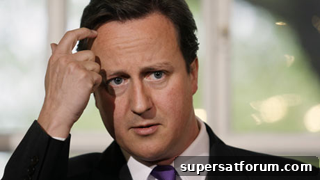
The UK Prime Minister, David Cameron, has vowed that the United Kingdom will not miss the 5G opportunity. Speaking at the CeBIT technology show in Hannover, he outlined plans to make Britain the “most digital nation in the G8.”
The UK’s 4G rollout was widely criticised for being slow. A significant factor was the way spectrum was auctioned, which left EE—the joint venture formed by Orange and T-Mobile—as the only operator able to provide 4G to the public for an extended period.
“With 4G, an 800 megabyte movie takes around 40 seconds to download; with 5G that would be cut to one second,” Cameron said.
“This is a prize that researchers all over the world are pursuing, and I am pleased to announce a new collaboration between the University of Dresden, King’s College London and the University of Surrey,” he added.
His speech did not specify how much funding, if any, will be allocated to support this research, a notable omission given the government’s ongoing budget reductions aimed at lowering the national deficit.
Separately, the University of Surrey is partnering with industry to establish a dedicated 5G Innovation Centre on its main campus in Guildford. Last autumn the university received £11.6 million from the Higher Education Funding Council for England to support the centre, alongside contributions of time and expertise from vendors including Huawei, Samsung and Telefónica.
Some industry observers are sceptical about pledges on 5G because the industry has not yet settled on a clear definition; there is ongoing debate about what 5G should look like and how it will be specified.
Matthew Howett, a telecoms and technology analyst at Ovum, commented: “I understand why David Cameron, Angela Merkel and others in Europe are signalling their interest, but currently it is meaningless.”
The Prime Minister also pledged to turn the “Internet of Things” from a slogan into tangible reality. He announced £73 million to support research in this area and to help advance Britain’s digital ambitions.
“These developments could allow billions of everyday objects to communicate over the internet using low-cost, low-power chips,” Cameron said.
“This has enormous potential to change our lives. Smart electricity meters that communicate with the grid to secure the best prices, health monitors that track your heart rate, water pipes that report pressure drops—and yes, even a fridge that can order milk when supplies are low,” he added.
What do you think of Cameron’s pledges to position the UK as a leader in these technologies?