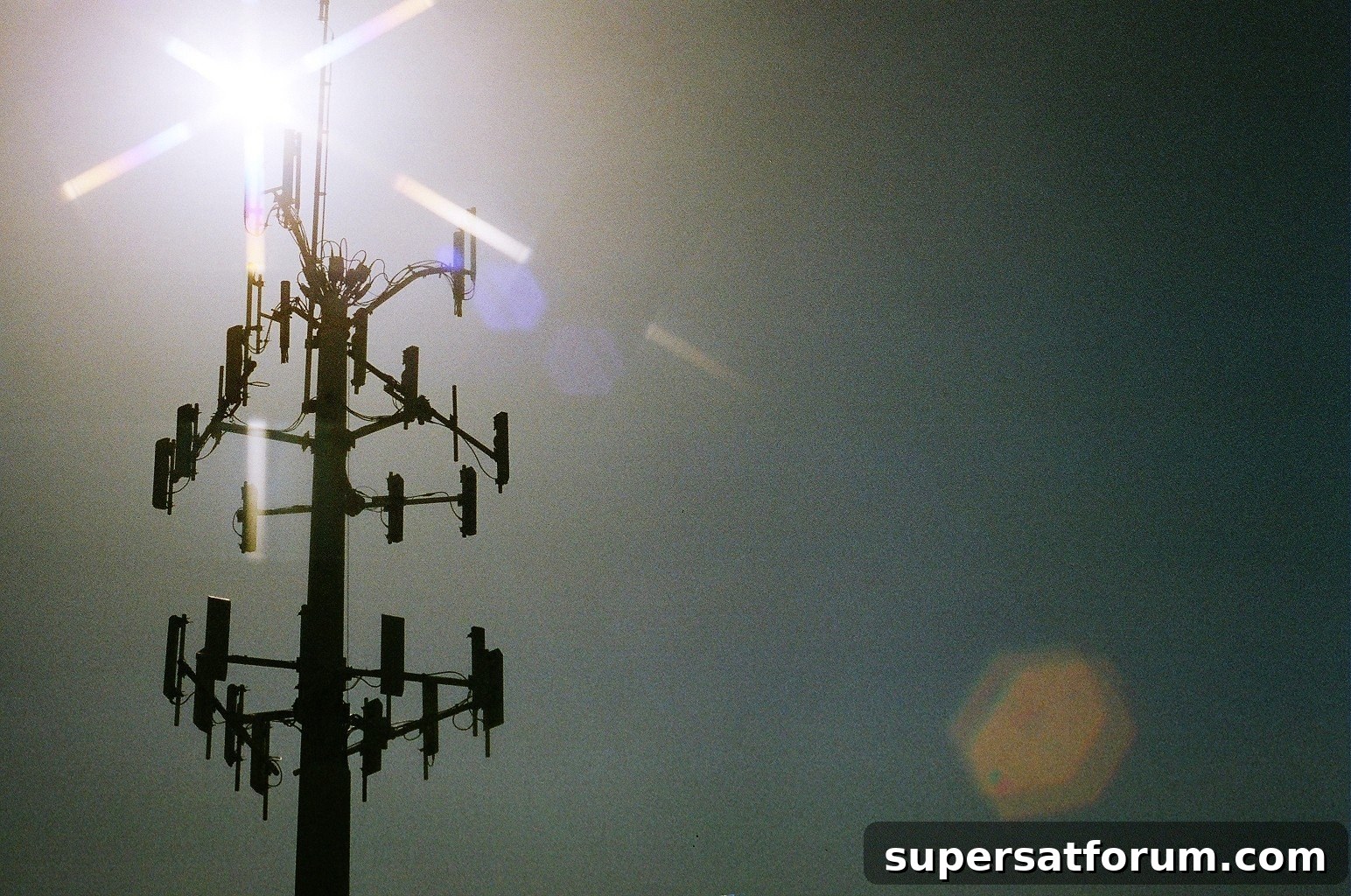
In wireless infrastructure, a longstanding challenge has been the gap between what engineers design and what ends up installed on site. Plans specify antenna height, tilt, azimuth, and orientation with precision. Yet when contractors reach the tower, real-world conditions often change the outcome. Undocumented or legacy mounts, incomplete records, and human error can all affect the quality of execution.
Until recently, the industry tolerated these mismatches and absorbed the costs that came with the status quo. The stringent demands of 5G and fixed wireless access (FWA), however, have reduced that tolerance. Even a slight deviation in height or a few degrees of tilt can degrade coverage or cause interference, and operators increasingly seek to avoid the added expense and delay of repeat site visits to correct issues.
The cost
Most sites lack a single, verified record of what is actually installed. Instead, teams rely on drawings, photos, or engineers’ notes that often conflict. This mismatch between intent and reality is a structural vulnerability during tower upgrades: it can delay service rollouts, reduce network reliability, and increase long-term maintenance costs.
As 5G depends on advanced antenna systems such as multiple-input, multiple-output (MIMO) and beam-forming arrays, precise installations are critical. System performance depends heavily on antenna placement, orientation, and alignment relative to other network elements.
Digital inspections, drone surveys, and digital twins
Emerging digital inspection and site-validation solutions provide a more reliable alternative. Before any upgrade begins, a drone-based pre-construction survey captures the tower’s as-is condition. From that survey, teams create a digital twin or detailed engineering model that serves as the foundation for the operator’s upgrade plan—defining exactly which antennas, structures, or equipment should be added, replaced, or removed.
Real-time on-site validation
After contractors mount equipment—antennas, cables, or radios—a follow-up drone inspection records the new configuration. Guided by the engineering model, the drone revisits precise points to validate equipment position, height, orientation, and other parameters.
Engineers can use augmented-reality overlays while the system compares the planned design with the actual installation. Visual discrepancies become immediately apparent, allowing contractors to correct issues on the spot and repeat the survey until the installation matches the plan.
When the site is validated, operators receive a formal as-built report documenting the installation. That report becomes a shared reference for site acceptance, integration, and billing—reducing reliance on ad hoc post-hoc inspections by multiple parties.
Precision now matters more
Modern antenna systems using MIMO and advanced array technologies deliver higher throughput and lower latency, particularly in dense urban environments. As operators deploy denser networks with small cells, distributed antenna systems, and rooftop sites, installation volume and complexity rise—and with them the likelihood and cost of errors.
Business implications for stakeholders
Contractors and installation teams can reduce site-level costs through more accurate first-time installs. Mobile network operators gain confidence that sites will perform as planned from day one, minimizing launch delays and preserving initial performance in coverage, capacity, and throughput while lowering integration risk.
Tower owners benefit from a clear, shared record of what is installed, which helps resolve disputes over tenancy, billing, and equipment placement.
Conclusion
What was once considered “good enough”—installing roughly to plan with manual inspections—can be greatly improved. Combining drone surveys, digital twin models, and on-site validation creates a more dependable network ecosystem.
For decision-makers overseeing network rollouts, infrastructure investments, or tower portfolios, these approaches offer a pathway to more predictable deployments and better business outcomes.
(Image source: “Cellphone tower” by Adam Freidin is licensed under CC BY 2.0.)
Want to learn about the IoT from industry leaders? Check out IoT Tech Expo, taking place in Amsterdam, California, and London. The event is part of TechEx and is co-located with other leading technology gatherings. For event details and registration, consult official event materials.
Telecoms content is produced by TechForge Media. Explore their upcoming enterprise technology events and webinars through official channels.