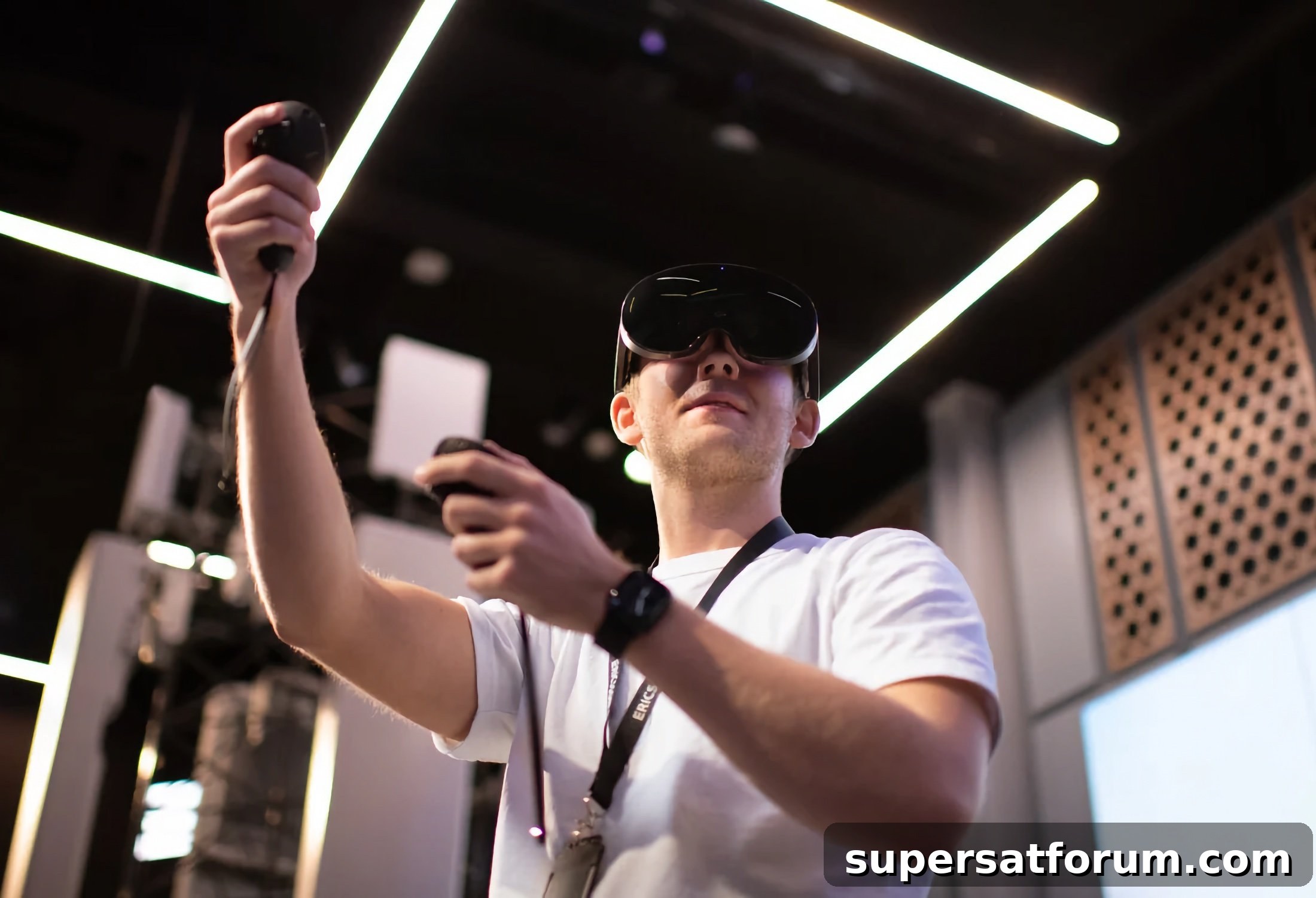
Ericsson is accelerating Thailand’s digital transformation by leveraging its extensive 5G capabilities and global expertise. The company today outlined a vision to help Thailand advance toward a robust digital economy, focusing on innovation, collaboration, and sustainable network infrastructure.
At the heart of Ericsson’s initiative is the newly completed 5G Innovation and Experience Studio located at Thailand Digital Valley. Developed in partnership with the Royal Thai Government via the Digital Economy Promotion Agency (DEPA), this facility functions as a state-of-the-art 5G co-creation hub designed to support development, testing, and commercialization of next-generation digital solutions.
Anders Rian, President of Ericsson Thailand, commented: “5G is a platform for innovation. It enables new services for consumers, enterprises, and industry. We remain committed to fostering partnerships and innovations to ensure that Thailand reaps the full benefits of a robust and sustainable 5G network.”
The studio features Ericsson’s advanced 5G sandbox network, built to develop, test, verify, and certify new 5G use cases together with local and international partners. Demonstrations at the studio include Automated Mobile Robots (AMR), an automated production machine developed with Mitsubishi, and 360-degree wearable CCTV cameras—showcasing practical industrial, enterprise, and public-safety applications of 5G technology.
Rian added that the 5G Innovation and Experience Studio is intended to spark new use cases across Thailand by harnessing 5G’s full potential. “By collaborating with ecosystem partners, we aim to drive digital transformation that benefits people, businesses, and the national economy,” he said.
Ericsson’s recent Mobility Report underscores strong prospects for 5G adoption in the region. The report projects 5G subscriptions in Southeast Asia and Oceania will rise from 61 million at the end of 2023 to about 560 million by the end of 2029, representing roughly 43% of all mobile subscriptions in the region by that year.
Alongside subscription growth, data usage is expected to climb sharply. Average monthly mobile data traffic per smartphone user in Southeast Asia is forecast to increase from 17 GB in 2023 to 42 GB by 2029, reflecting expanding demand for data-intensive services and applications.
On a global scale, 5G momentum continues to build. Around 300 Communication Service Providers (CSPs) worldwide now offer 5G services, and roughly 50 have launched 5G Standalone (5G SA). Ericsson currently supports 162 live 5G networks across 69 countries, reinforcing its role in global network deployments.
Ericsson’s leadership in 5G network infrastructure has been recognized by industry analysts. For the fourth successive year, Frost & Sullivan ranked Ericsson as the leader in its Frost Radar 5G Network Infrastructure Market analysis, which evaluates performance across radio access networks (RAN), transport networks, and core networks.
With its expertise and commitment to innovation, Ericsson is positioning itself as a central partner in shaping Thailand’s digital future. Ericsson Thailand’s efforts to foster collaboration, incubate use cases, and scale 5G solutions aim to unlock tangible benefits for enterprises, consumers, and the broader economy.
(Image Credit: Ericsson)
See also: Ericsson: 5G FWA is gaining momentum
Unified Communications is a two-day event held in California, London, and Amsterdam that explores the evolution of workplace collaboration in a digital-first world. The event is co-located with Digital Transformation Week, IoT Tech Expo, Edge Computing Expo, Intelligent Automation, AI & Big Data Expo, and Cyber Security & Cloud Expo.
Discover other upcoming enterprise technology events and webinars powered by TechForge.