T-Mobile’s Un-carrier strategy has resonated with customers and disrupted the industry by rejecting long-standing conventions in favor of more modern approaches. While this particular announcement may have felt less dramatic than some earlier Un-carrier events, it still delivered meaningful improvements for both consumers and business customers.
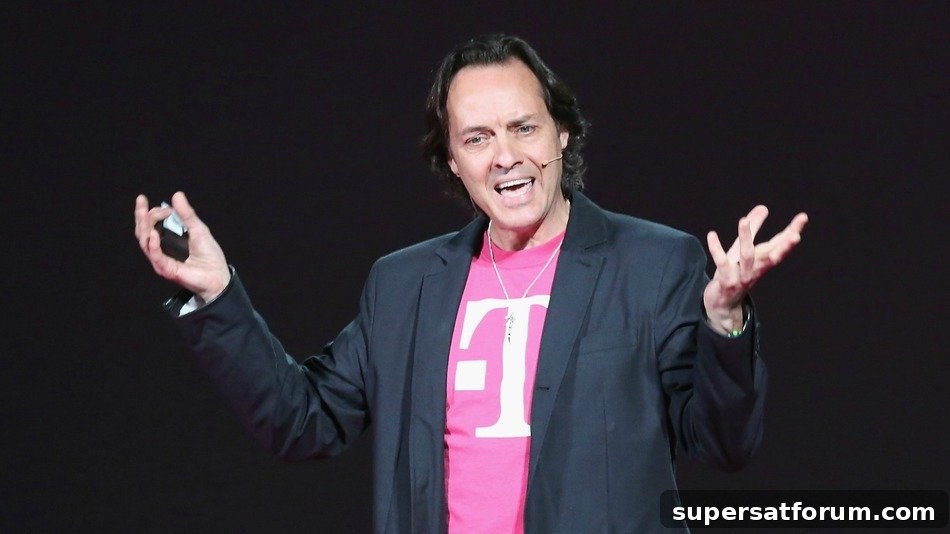
John Legere, T-Mobile’s outspoken CEO, drove the message home on stage. He expressed incredulity about industry reactions to technologies T-Mobile is adopting early, saying the external commentary “blew his mind.” These technologies are ones smartphone manufacturers and competitors have been slow to adopt, and T-Mobile is moving quickly to bring their benefits to customers.
First, T-Mobile plans to expand reliable data coverage by reaching areas where traditional cellular signals struggle. The carrier is doing this by leveraging Wi‑Fi and customer broadband connections to deliver mobile service where a standard tower signal can’t reliably penetrate.
This approach isn’t entirely unprecedented. For example, Vodafone has rolled out a similar effort in the UK using femtocell technology to bring 3G coverage to rural villages through an “Open Sure Signal” program. T-Mobile’s initiative, however, takes a slightly different route: the company is promoting Personal CellSpot devices that allow customers to use their home or office routers to provide full-strength service indoors. As Legere put it, this essentially “adds millions of towers to our network in a single day.”
In addition to expanding in‑home coverage, T-Mobile announced a multi-year, exclusive agreement with in-flight Wi‑Fi provider Gogo. Under this arrangement, T-Mobile customers on Gogo-equipped flights within the U.S. will be able to send and receive unlimited texts and pictures and access visual voicemail while airborne.
T-Mobile notes that Gogo-equipped flights represented roughly three-quarters of domestic flights in the past year, making this feature particularly valuable for business and corporate users who travel frequently. The in-flight messaging service is scheduled to begin on September 17 and will be free for all T-Mobile Un-carrier customers.
Finally, Legere highlighted the growing importance of Wi‑Fi calling, a capability now included on many recent flagship smartphones from major manufacturers. Wi‑Fi calling lets customers place and receive calls where cellular coverage is weak by routing voice over a Wi‑Fi connection. T-Mobile plans to enable Wi‑Fi calling at no extra charge, helping customers stay connected even in areas with poor cell signal.
What do you think about T-Mobile’s latest Un-carrier moves? Let us know in the comments.
To learn about other industry events like T-Mobile’s Un-carrier announcements, visit Telecoms Events.