Stockholm – 12 March 2026 – AI data cloud company Snowflake, together with analyst firm Omdia by Informa TechTarget, publishes the report “The ROI of Gen AI and Agents.” Based on responses from 2,050 business and IT leaders in European and global organizations, the study provides a clearer view of how artificial intelligence is influencing the labor market.
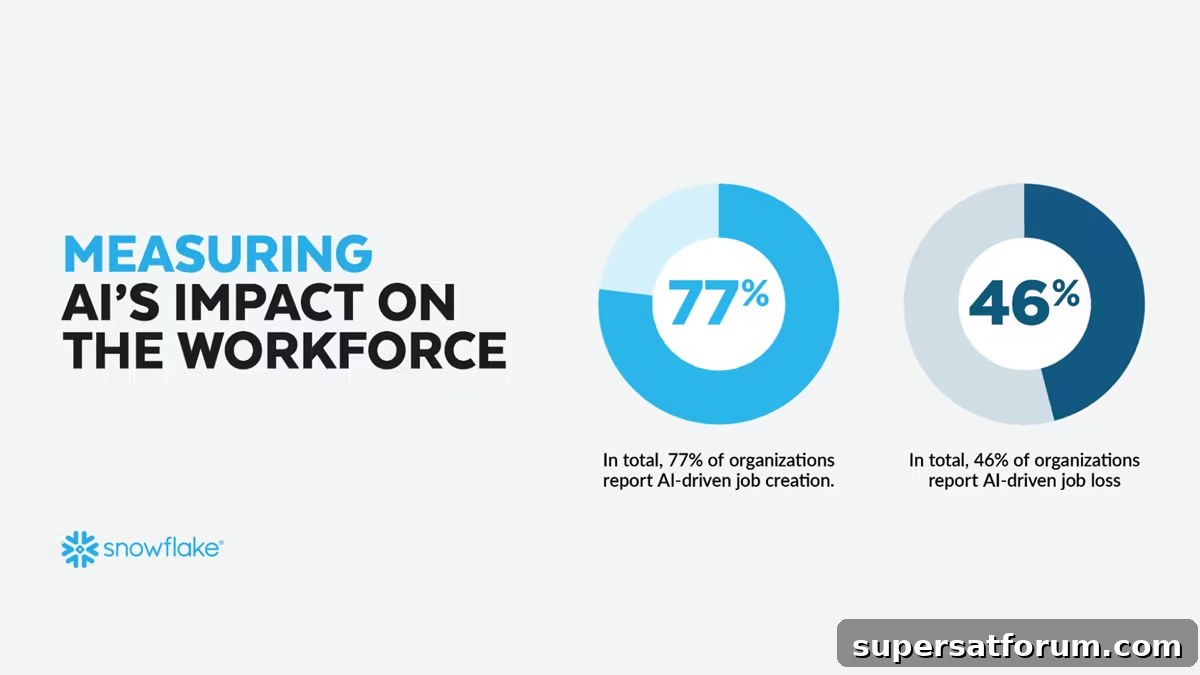
The findings show that AI’s impact on workforce dynamics is more nuanced than many headlines suggest. In the survey, 77 percent of respondents said AI has led to increased hiring, while 46 percent reported job reductions. Among organizations experiencing both effects, 69 percent said AI has had an overall positive impact on jobs.
The study also indicates that the organizations achieving the greatest results with AI are those that embed the technology in core operations rather than treating it as a series of isolated experiments. Companies that work systematically with data platforms and clear AI strategies tend to realize higher business value and stronger returns on their investments.
AI must be integrated into operations
As European organizations continue to accelerate AI adoption while navigating regulatory requirements such as the EU AI Act, the highest returns will not come from experimentation alone, says Dayne Turbitt, Senior Vice President for EMEA at Snowflake.
Turbitt argues that AI must be embedded in core business processes while organizations simultaneously strengthen data maturity, governance models, and security practices to meet regional compliance expectations.
According to Turbitt, the European labor market will increasingly be shaped by organizations that can combine ambitious AI programs with robust data infrastructure and strong governance. Companies that convert AI into measurable business value will build sustainable competitive advantages across multiple markets.
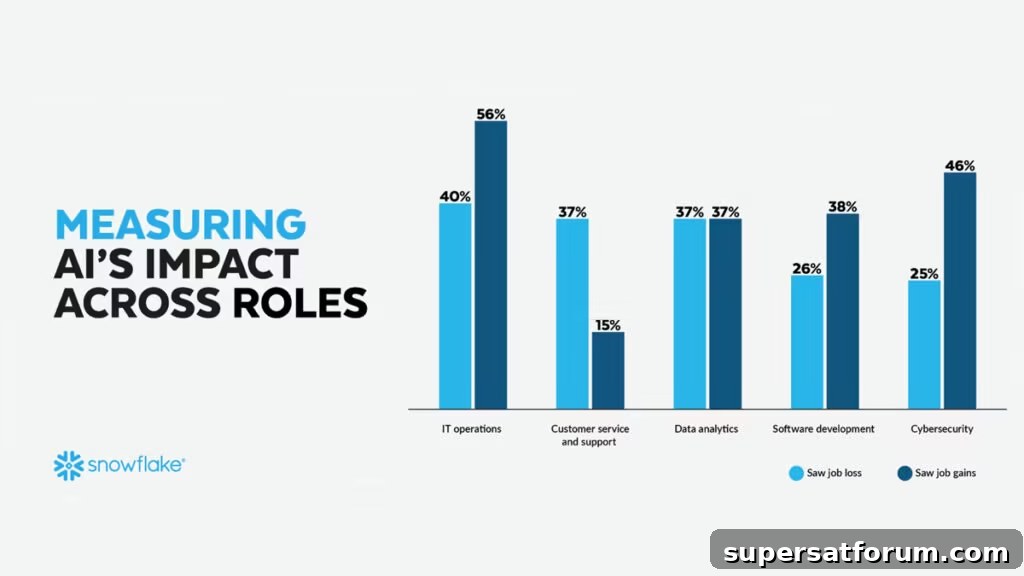
Maturity determines AI’s effect
The report further shows that organizational maturity matters. Among companies that have implemented AI across multiple business areas, 75 percent report a positive impact on their workforce. For organizations in earlier stages of AI adoption, the figure is 56 percent.
This suggests that AI’s effects often evolve as the technology becomes more deeply integrated into processes and decision-making systems.
For many companies, AI is shifting from being viewed solely as an automation tool to becoming a central element of future digital business strategy.
The report emphasizes that organizations investing strategically in AI, skills development, and data infrastructure are best positioned to benefit. For European firms, AI is increasingly a driver of innovation, new roles, and changed ways of working rather than simply a replacement for existing jobs.