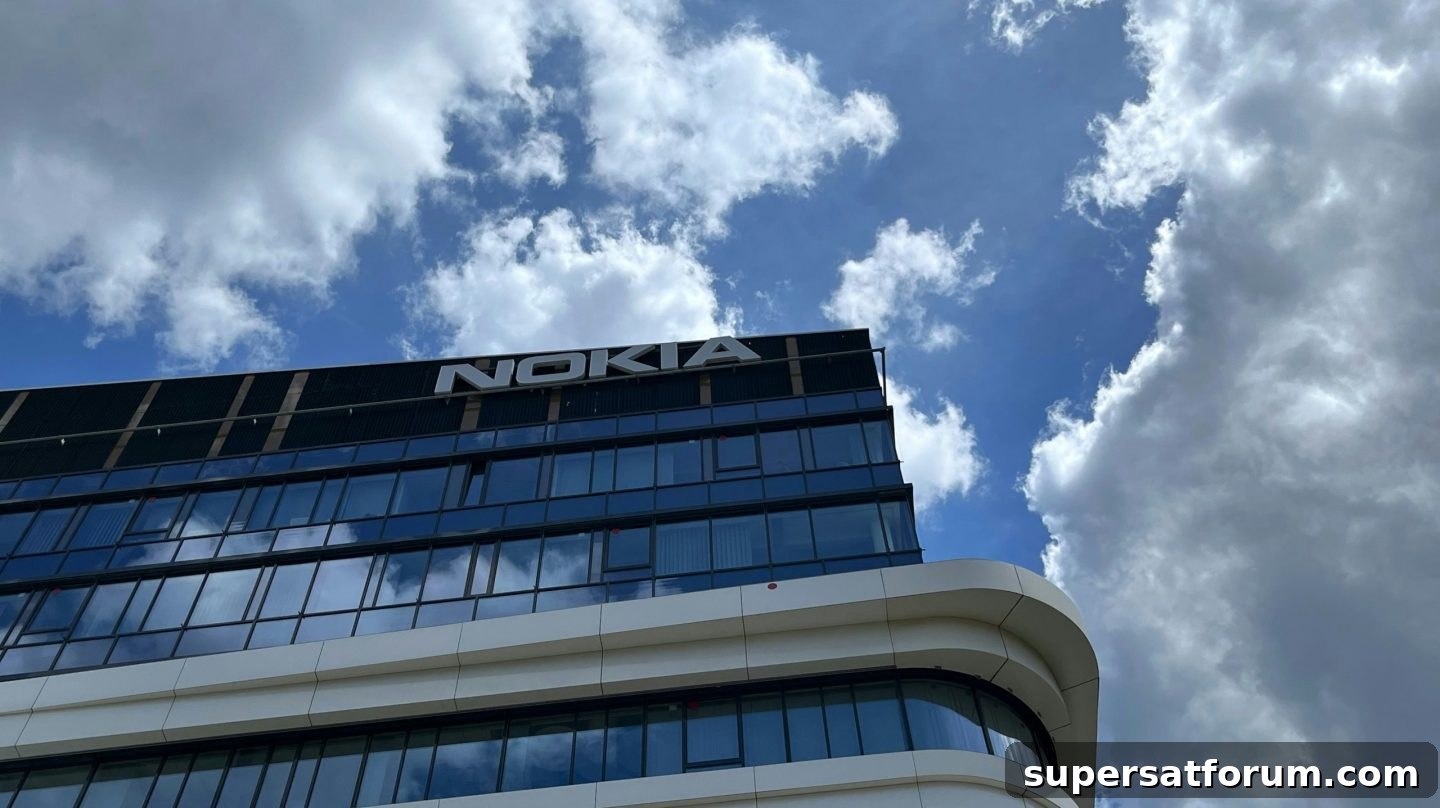
Telecom networks built by vendors like Nokia are intended to operate for decades, but the rules that govern them are changing far more quickly. Decisions about who supplies network equipment, where components originate, and which countries are considered trusted partners are no longer driven solely by cost or performance. They are increasingly shaped by security concerns, trade policy and shifting geopolitical alliances.
This shift forces the telecom industry to confront a fundamental question: how much independence is realistic in a global system built on shared technologies and cross-border supply chains?
Comments from Justin Hotard, President and CEO of Nokia, help clarify how vendors are responding. In a recent interview with Reuters, Hotard described the relationship between Europe and the United States as one of “co‑dependence,” particularly around technology supply chains and secure network equipment. His observations reflect how infrastructure planning is evolving across Western markets.
At a practical level, telecom networks are no longer treated as simple utilities. Governments view them through the lenses of national security, economic policy and industrial strategy. That perspective has already changed procurement decisions in many countries, especially following restrictions on certain Chinese vendors in recent years. The consequence is a narrower pool of suppliers and greater pressure on those that remain.
Hotard’s point is that Europe and the U.S. are too closely linked to act in isolation. “We are co‑dependent,” he said, citing shared stakes in advanced semiconductors, software and network equipment. While policy debates often emphasize self‑sufficiency, the telecom sector still depends on components and expertise that move across the Atlantic in both directions.
Long-term network planning under tighter constraints
This matters for operators planning long‑term network investments. Deploying 5G and preparing for future upgrades requires stable access to hardware, timely software updates and long‑term support. Sudden changes in trade rules or export controls can delay rollouts or raise costs, especially where viable alternatives are limited.
The risk is amplified by market concentration. Industry data show a small number of vendors capture the majority of global radio access network (RAN) spending. In regions where Chinese suppliers face restrictions, operators often have only two or three realistic choices. That concentration raises the importance of political alignment between supplier countries and customer markets.
Hotard’s remarks also highlight a deeper issue: Europe’s role in the global tech supply chain. European companies remain strong in telecom equipment, but the region relies heavily on the U.S. for advanced chips and cloud infrastructure. Conversely, U.S. tech firms depend on European markets and regulatory approval to scale globally. Efforts to decouple these systems risk creating inefficiencies on both sides.
Recent policy moves underscore this tension. The European Union has pursued greater “strategic autonomy” in critical technologies, while the U.S. has broadened export controls in the name of national security. In telecom, these goals often collide with the practical realities of how networks are built: equipment may be assembled in one country, run software from another, and depend on chips designed elsewhere.
Telecom network security goals, cost pressure, and shared risk
For operators, the challenge is less abstract geopolitics and more operational certainty. Network planning cycles span decades, not election terms, so operators need assurance that vendors will supply upgrades, security patches and spare parts throughout a network’s lifecycle. Any supply‑chain uncertainty becomes a direct business risk.
Security concerns remain central. Governments in Europe and North America argue that reducing reliance on higher‑risk vendors lowers exposure to espionage or disruptive activity. At the same time, narrowing the supplier base can reduce competition and slow innovation. Balancing these trade‑offs has become a defining issue in telecom policy.
Hotard suggests closer alignment between Europe and the U.S. could help manage—though not eliminate—those risks. Shared standards, coordinated regulations and predictable trade relationships may provide operators with more stability than a unilateral push for full independence.
Cost is also critical. Operators face pressure from high energy costs, rising labour expenses and flat consumer revenues in many markets. With data demand growing faster than revenue, any increase in equipment prices or deployment delays tightens margins further.
Looking ahead, the debate over co‑dependence is likely to deepen as networks become more software‑centric. Cloud‑native cores, open RAN initiatives and AI‑driven network management increase ties between telecom equipment and broader tech ecosystems—many dominated by U.S. firms. Attempts to separate these systems may prove more difficult than anticipated.
For now, Hotard’s message reflects Nokia’s reading of the current landscape. Telecom networks sit at the intersection of technology, policy and economics. Europe and the U.S. may speak about independence, but in practice their telecom futures remain closely linked. How they manage that link will shape not only who supplies the next generation of networks, but also how resilient and affordable those networks are for years to come.
(Photo by M. Rennim)

Want to explore how IoT is shaping telecoms and connectivity? Attend the IoT Tech Expo events in Amsterdam, San Francisco and London to learn how advances in 5G, edge computing and IoT are influencing the future of networks and services. The conference series is part of TechEx and co‑located with other industry events.
Telecoms News is produced by TechForge Media. Discover other upcoming enterprise technology events and webinars hosted by the publisher.